
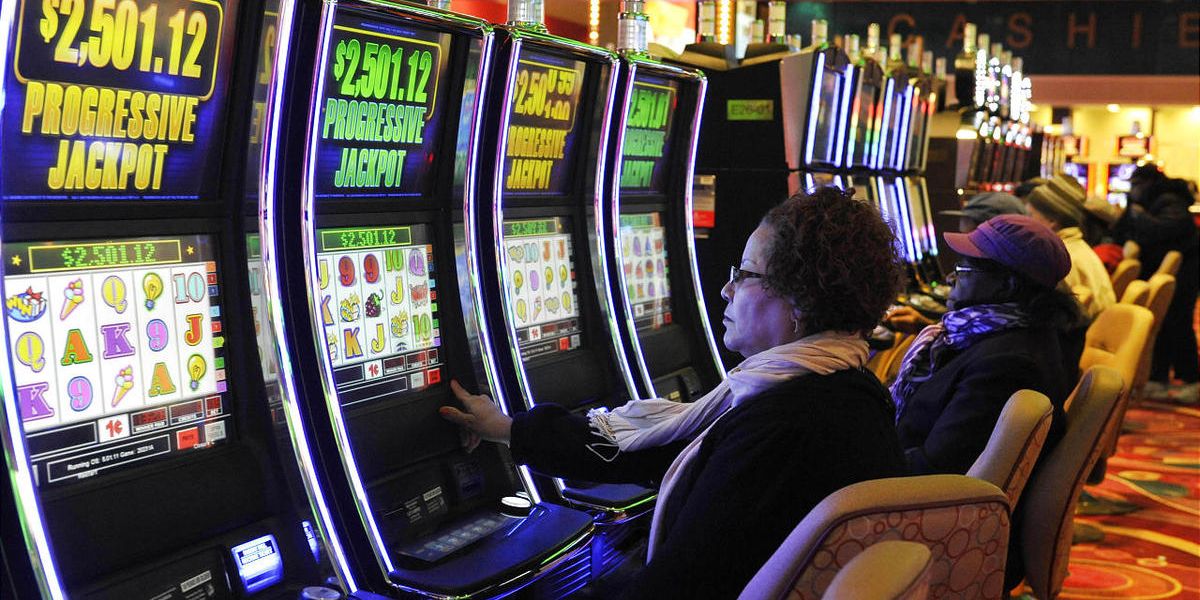
I have accumulated hundreds of hours chasing progressive jackpot slots, and these games are nothing like standard fixed jackpots https://ringospincasino-ch.ch/fr-ch/slots/. A fixed jackpot pays a set amount, but a progressive prize continues to increase with every spin across a network of players. That produces a totally unique rhythm, risk profile, and reward potential. The stakes appear higher, pay tables function harder, and every small decision carries weight more. At Ringospin Casino, I regard progressive slots as a separate category with their own rules, not casual spins. You should too.
What Makes Progressive Jackpot Slots Different
The core difference is clear: a tiny fraction of every bet feeds the jackpot pool. On a fixed jackpot slot, the top prize is fixed. On a progressive slot, it rises in real time. That means you are not simply up against the machine; you are vying for a collective pot that can exceed six, seven, or even eight figures. That expansion has a downside, though. These games often alter base payouts or hit frequency to finance the jackpot contribution. Understanding that trade-off is the key step to playing with confidence. I have seen games where the base game return declines by two or three percent merely to drive a eye-catching top prize, and that change demands a entirely different bankroll strategy.
Common Mistakes I Observe Players Commit
After years observing fellow players at the progressive machines, I cataloged a series of errors that deplete bankrolls with ruthless efficiency. The biggest blunder is playing under the top amount when the jackpot trigger needs a maximum wager. Nothing stings more than lining up the winning combo only to realize the progressive jackpot is not eligible because of a smaller wager. I have watched players depart heartbroken, and I would never want to be in that position. A further typical misstep is going after a jackpot that has already climbed far beyond its typical payout point without modifying bet sizing or session length to compensate for the prolonged volatility.
Players also undervalue the emotional cost of progressive play. The standard game can appear harsh when a substantial chunk of every spin feeds a prize you could never land. I observe players tilt, boost their stake unreasonably, and waste a weekly budget in an hour. The fix is simple but demands self-control. Here are the rules I enforce on myself every single session without exception:
- Define a strict loss cap before opening the game and never modify it mid-session, no matter how close the jackpot appears.
- Confirm the max bet condition for jackpot eligibility and never spin below that threshold if the main prize is the goal.
- Track the current jackpot value against its historic average trigger point and only gamble when the prize is over that benchmark.
- Make a mandatory five-minute break after each 100 spins to reset mentally and reassess the session’s trajectory.
- Never pursue losses by jumping to a more volatile progressive after a losing streak on a milder title.
Varieties of Progressive Jackpots
Single-Machine Progressives
A single-machine progressive is fueled only by wagers on that specific machine or game. The prize can still be impressive, but it increases gradually because there is only one source of contributions. These prizes tend to be more modest and hit with greater frequency than their connected cousins. I view them as a reliable warm-up choice when I seek the prize rush without the impossible odds. The base amount is usually small, and the post-win amount after a payout offers me a clear benchmark for deciding if the existing prize is worth playing for. Independent progressives are perfect for players who seek a real chance at a life-changing sum without competing against a vast network of participants.
Venue-Linked Progressives
Local area progressives connect a number of machines inside a single venue or a handful of locations. The prize pool grows more quickly than a standalone because multiple players contribute simultaneously, but the network remains limited enough that odds stay relatively grounded. I find these jackpots frequently exist in a prime zone where the amount is considerable but the hit frequency does not feel unreachable. The contribution rate is typically higher than standalone setups, and the starting amount resets to a more generous floor. When I check out a new casino floor, I consistently search for the networked progressive group before anything else because the value appeal is generally more favorable than the massive wide-area networks.
Multi-Venue Network Progressives
WAN progressives are the monsters. Such jackpots connect slots spanning many casinos, occasionally across entire countries or continents. The reward can soar into tens of millions because countless players feed the accumulation every minute. The compromise is terrible odds. The contribution rate is steep, and the trigger conditions are commonly locked behind maximum bet requirements or ultra-rare bonus rounds. I handle these games with firm session boundaries and a solid knowledge that I am buying a raffle ticket presented in a slot machine. The excitement is undeniable, and watching the ticker rise in live is pure adrenaline, but control matters more in these games than in any other context.
Key Factors I Evaluate Before Playing
Before I load any progressive slot, I run through a mental checklist that has protected my bankroll more times than I can count. These factors distinguish profitable sessions from frustrating ones, and missing even one of them is a mistake I refuse to repeat. Progressive slots demand more scrutiny than standard games because the jackpot contribution alters the math in ways that are not always obvious from the pay table alone. I approach every progressive session like an investment decision, not a casual spin, and that mindset shift has changed my results over the long run.
Return to Player and Distribution Rate
The published RTP on a progressive slot often looks competitive, but I dig deeper to understand how much of that return is tied to the base game versus the jackpot contribution. A game advertising ninety-six percent RTP might only pay eighty-eight percent in regular payouts, with the remaining eight percent moving into the jackpot pool. That means my bankroll runs out faster between bonus triggers, and I have to size my bets accordingly. I always review the game rules or the provider’s published data to find the split. If the base game return drops below ninety percent, I either reduce my bet size significantly or switch to a different title entirely.
Top Prize Activation Conditions
Every progressive slot features a particular trigger mechanism, and I never spin without knowing exactly what it is. Some games require landing five wild symbols on a specific payline during a maximum bet spin. Others launch a random jackpot bonus game where a wheel spin or a picking round establishes the prize tier. A few modern titles utilize a must-drop-by mechanism where the jackpot is guaranteed to pay before it reaches a certain threshold. I prefer must-drop-by progressives because the transparency provides me a mathematical edge https://www.lequipe.fr/Jo-2024-paris/Tennis-de-table/Actualites/Les-freres-alexis-et-felix-lebrun-et-simon-gauzy-en-bronze-aux-jo-de-paris-2024-apres-une-longue-bataille-face-au-japon/1490085 in timing my sessions. Random triggers can be exciting, but they provide zero strategic leverage, and I consider them as pure entertainment rather than calculated plays.
Base Value and Reset Value
The seed amount is the minimum value the jackpot rebuilds to after a win, and I track this number obsessively. A high seed amount signifies the jackpot starts its climb from a generous baseline, which improves the expected value of every spin during the early growth phase. Low seed amounts lead to a longer grind before the prize becomes attractive. I keep a simple spreadsheet tracking seed values and average hit sizes for my favorite progressive titles. Over time, patterns emerge that help me spot when a jackpot is undervalued or overvalued relative to its historical payout behavior. This data-driven approach is not glamorous, but it delivers results.
The Way Progressive Jackpots Really Work
Every progressive jackpot is driven by a seed amount plus a contribution rate. The seed resets itself after a win. The contribution rate refers to the percentage of each wager that feeds the prize pool. When I spin, a fraction of my bet might go towards the jackpot instead of regular returns, which is why prizes grow quickly. Network jackpots with thousands of players expand faster than local ones. The random number generator continues to determine every spin, but the trigger is typically a rare combination or a bonus game. I always check both before I play. Some games require a specific symbol lineup on a max bet line, while others launch a separate bonus wheel where the jackpot is just one slice among many, and knowing that mechanic shapes how I size my bets.
FAQ
Must I always bet the largest to win a progressive jackpot?
Not always, but you must check the specific game rules before spinning. Many older progressive slots require a maximum bet to be eligible for the top prize, and missing that detail means you may achieve the winning combination and get only a fixed payout. Modern games increasingly offer jackpot eligibility at any bet level, though the odds might change with your wager size. I make it a habit to open the pay table and examine the jackpot trigger conditions before my first spin. Taking for granted eligibility is the fastest route to a heartbreaking near-miss, and I grasped this fact the hard way more than once.
What is a must-drop-by progressive jackpot operate?
A must-drop-by progressive jackpot comes with a guaranteed payout deadline. The game provider establishes a maximum threshold, and the jackpot has to be given before the prize reaches that value. This mechanic builds a transparent window where the expected value moves in the player’s favor as the jackpot approaches the drop point. I deliberately look for must-drop-by titles because they remove the uncertainty of an infinite climb. The countdown adds strategic depth, and I schedule my sessions to coincide with the final stretch when the probability of a trigger is mathematically highest.
Are there networked progressives harder to win than standalone ones?
My Approach for Jackpot Gaming Sessions
My strategy to progressive slot machines is built on budget splitting and precise trigger monitoring. I divide my gaming budget into two separate pools: a base game fund and a jackpot chase fund. The base game fund includes normal spins where I strive to extract value from normal payouts and bonus games. The progressive prize fund is earmarked for titles where the prize has crossed a threshold that makes the anticipated value appealing. I never mix these https://en.wikipedia.org/wiki/Scotty_Nguyen funds, and I never borrow from one to feed the other. This separation forces me think critically about each spin and prevents the emotional confusion that causes large stakes on a hot streak.
Time management also holds a major role in my strategy. I monitor busiest hours for networked jackpot games because greater player engagement speeds up jackpot increases. A wide area progressive might climb fifty thousand dollars during a hectic Saturday but only creep up 10,000 dollars during a calm Tuesday morning. I prefer to engage during peak periods when the jackpot is increasing quickly, as this reduces the waiting time between appealing prize levels. I also establish a firm loss limit at 20% of my gaming budget for any progressive game, irrespective of how tempting the reward seems. Leaving with the bulk of my funds safe is always positive, even if the major reward remains unclaimed.
Where do I discover the RTP split between base game and jackpot contribution?
Indeed, networked progressives are considerably harder to win because the player pool is immensely larger. A wide area network spanning thousands of machines signifies you are competing against an immense volume of spins, and the odds of landing the trigger combination on any individual spin are proportionally tiny. Standalone progressives offer better hit frequency but smaller prizes. I balance my play between both types based on my goals. When I want a feasible shot at a jackpot within a individual session, I stick to standalone or local area games. When I am prepared to treat the session as pure amusement with a lottery-style upside, I delve into the wide area networks.
How can I locate the RTP split separating base game and jackpot contribution?
Discovering the exact RTP split demands some digging, but the information is usually obtainable. I start by checking the game’s help screen or pay table, where many providers now disclose the base game return and the jackpot contribution separately. If the in-game information is incomplete, I visit the slot developer’s official website or search for third-party auditing reports. Some jurisdictions demand full RTP disclosure, and those reports often break down the allocation. I keep a running list of games with advantageous base game returns because a higher regular payout rate keeps my bankroll healthier during the long stretches between jackpot triggers.
Ought I play progressive slots with a limited bankroll?
It is possible to try progressive slots with less capital, however you must modify your expectations and bet sizing aggressively. I suggest focusing on low-denomination progressives where the minimum bet is budget-friendly and the jackpot trigger does not demand a max wager. Standalone progressives are generally more small-bankroll-friendly as the prize grows gradually and the hit frequency is greater. Avoid wide area network games if your budget is tight, because the extended dry spells between bonus features can wipe out a modest bankroll before the jackpot appears. Safeguarding your session length takes priority than pursuing a headline prize.
What constitutes the best moment to try a progressive jackpot slot?
The best time to spin is determined by the jackpot type and your strategic goal. For networked progressives, peak hours where player activity is highest speed up the prize growth, which means the jackpot attains attractive value thresholds faster. Nighttime and weekends commonly see the most action. For must-drop-by progressives, I focus on the window in which the prize is within ten to fifteen percent of the guaranteed drop point because the expected value reaches its peak in that range. Standalone progressives are less time-sensitive, yet I still prefer quieter hours during which I can zero in without distractions and track my session metrics with precision.
